Problem
Biosignals are often explored with separate devices, displays, and code.
Engineering Projects
Every project is documented as a process: Problem → Research → Design → Prototype → Testing → Reflection.
02 / TEIFeatured case study · 2025
Case-study process
Biosignals are often explored with separate devices, displays, and code.
Compared sensor requirements, signal types, interfaces, and power constraints.
Planned one interaction model around a shared controller and display.
Integrated ECG, EMG, and pulse-oximetry modes into one physical system.
Checked each mode separately, then resolved conflicts during system integration.
A modular architecture made debugging clearer and future changes more practical.
Design decision
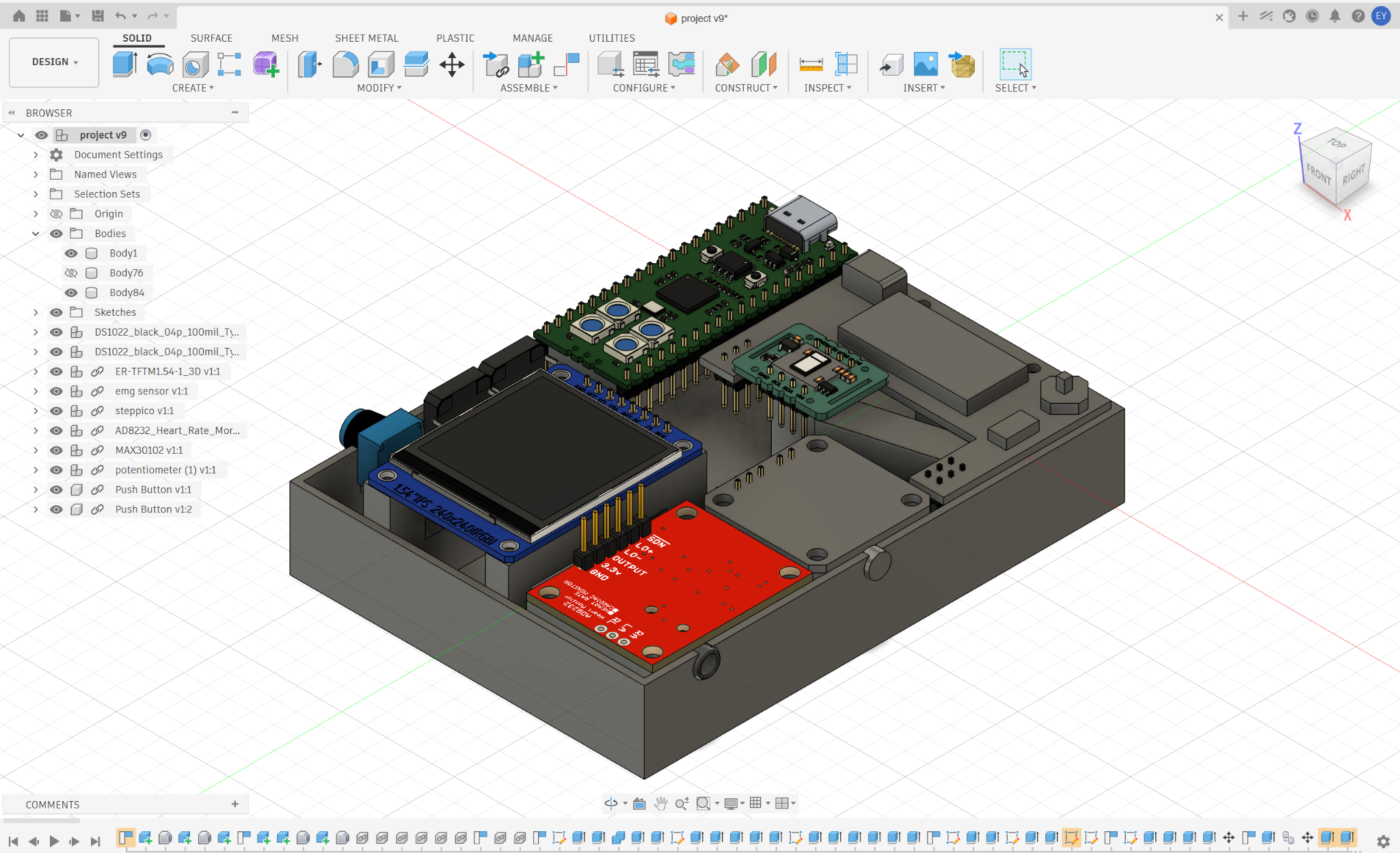
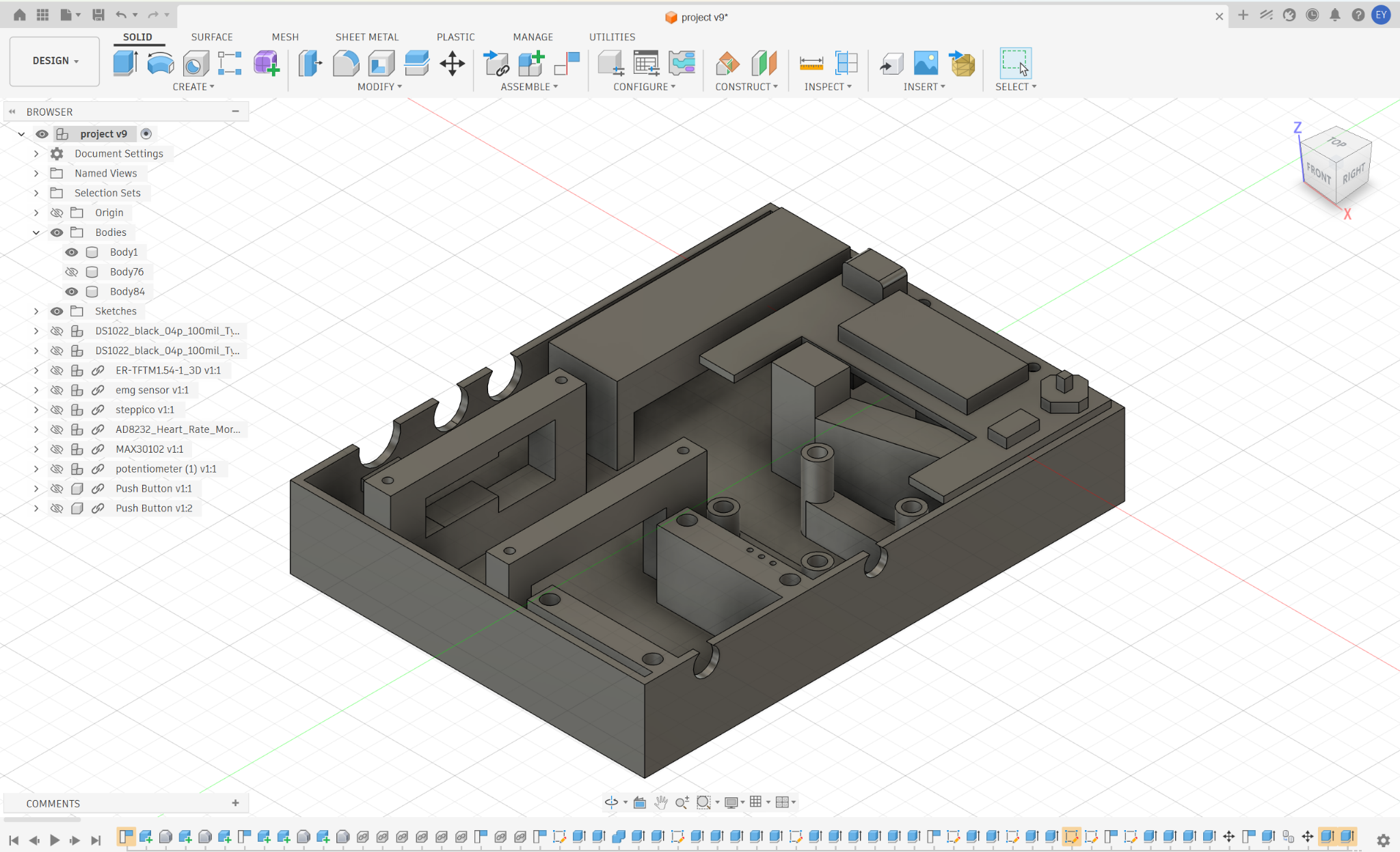
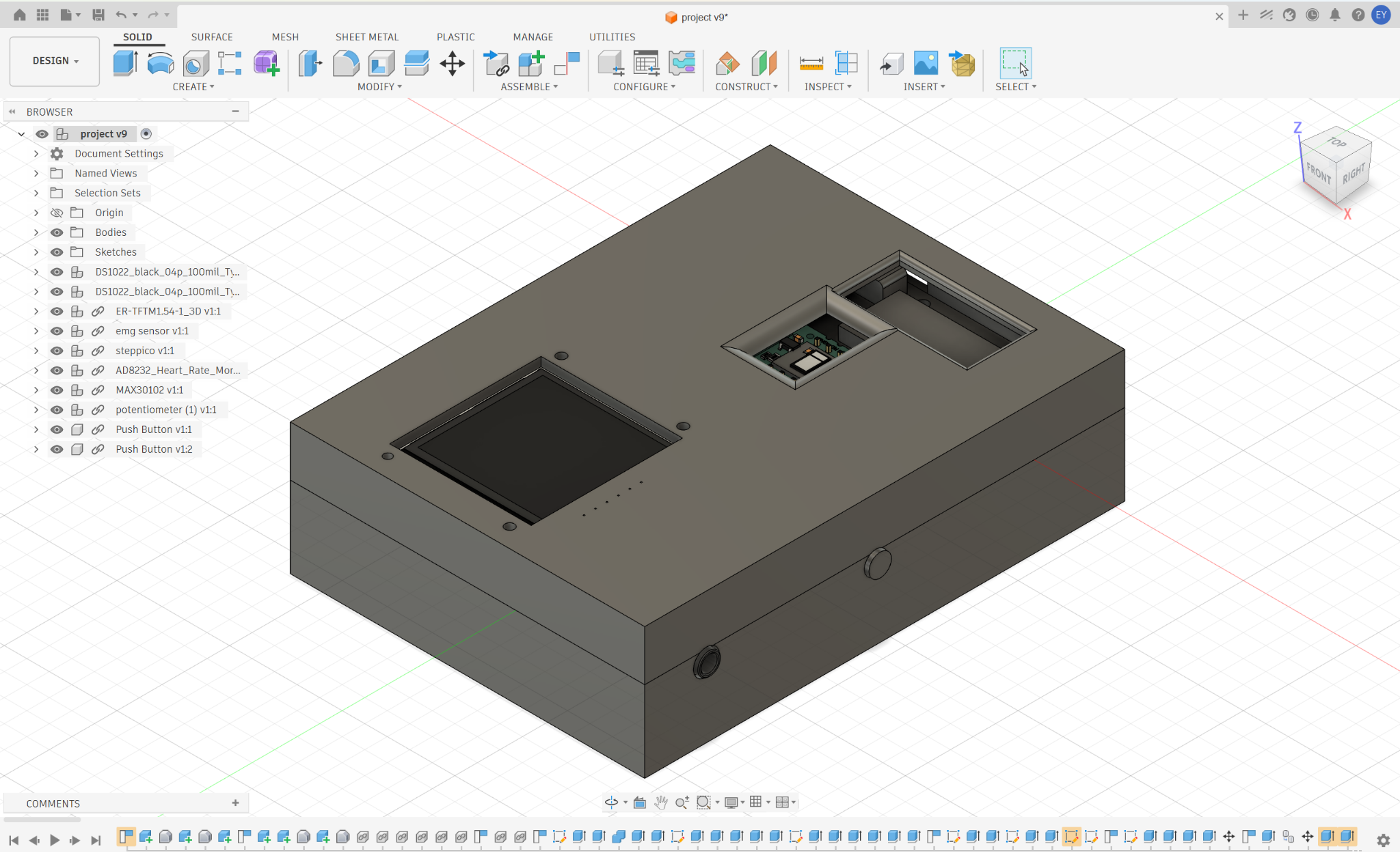
The enclosure was organized around the real controller, display, sensors, controls, connectors, and cable paths. Component clearances and mounting points were treated as engineering constraints rather than decoration added after the electronics worked.
Each biosignal mode was first developed independently. Integration then required shared display logic, mode switching, input mapping, and a physical arrangement that remained understandable during testing.
Educational engineering prototype. It is not intended for diagnosis, treatment, or medical decision-making. Body-connected testing should be supervised by a teacher or experienced adult.
What comes next
Future projects will be added when there is a real problem, a documented process, and evidence worth sharing.
The goal is not to fill a gallery quickly. It is to build a growing record of thoughtful student engineering across health, education, accessibility, transportation, sports, and the environment.
Have a problem worth exploring?
Submit an idea from your school, home, neighbourhood, sport, or daily routine.
Explore community ideas ↗