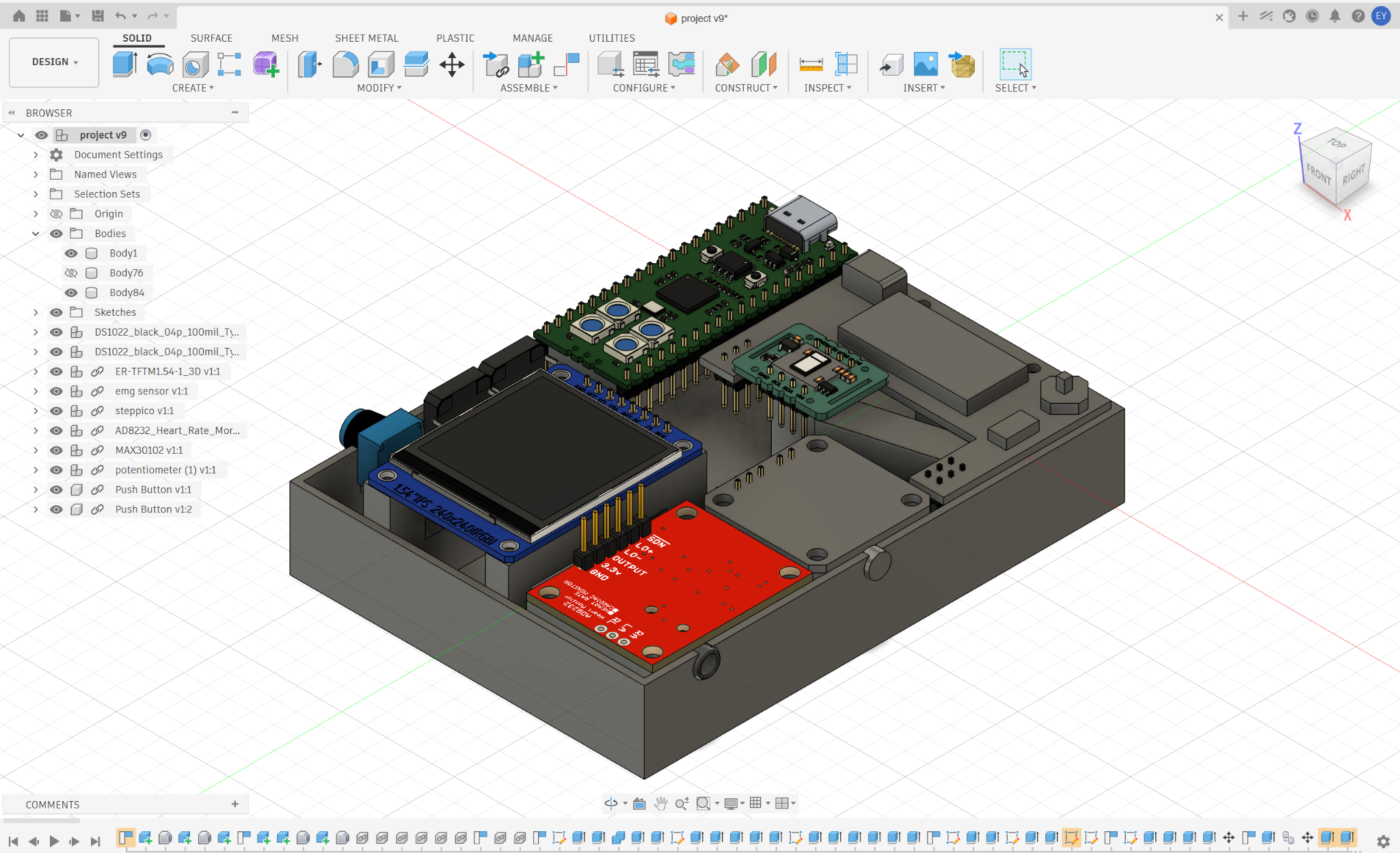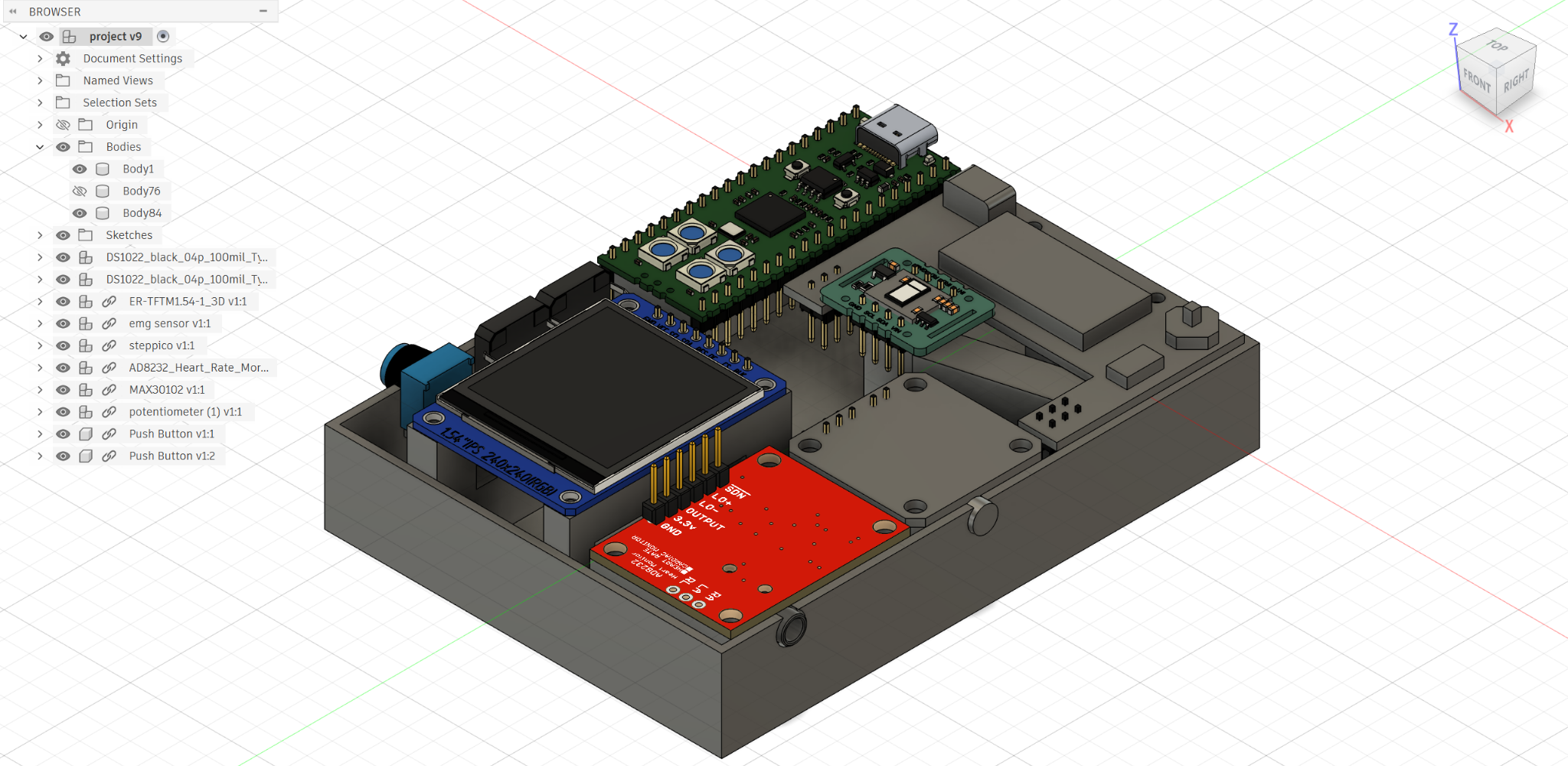
Fusion 360 model showing the complete internal electronics layout of the biosignal monitor

Independent engineering project · 2025

Engineering ideas, made physical.

A student-led workshop built around one principle: start with a real problem, then make an answer that can be tested.

Explore the flagship build

01STEPico controller

03biosignal modes

10 hdevelopment per week

Fusion 360 · internal assembly · iteration 09

01 / Featured design

One shared interface.
Three different signals.

Independently conceived and developed from June to August 2025, the portable prototype combines ECG, EMG, and pulse-oximetry sensing in one system.

Embedded systemsSignal processingProduct designFusion 360
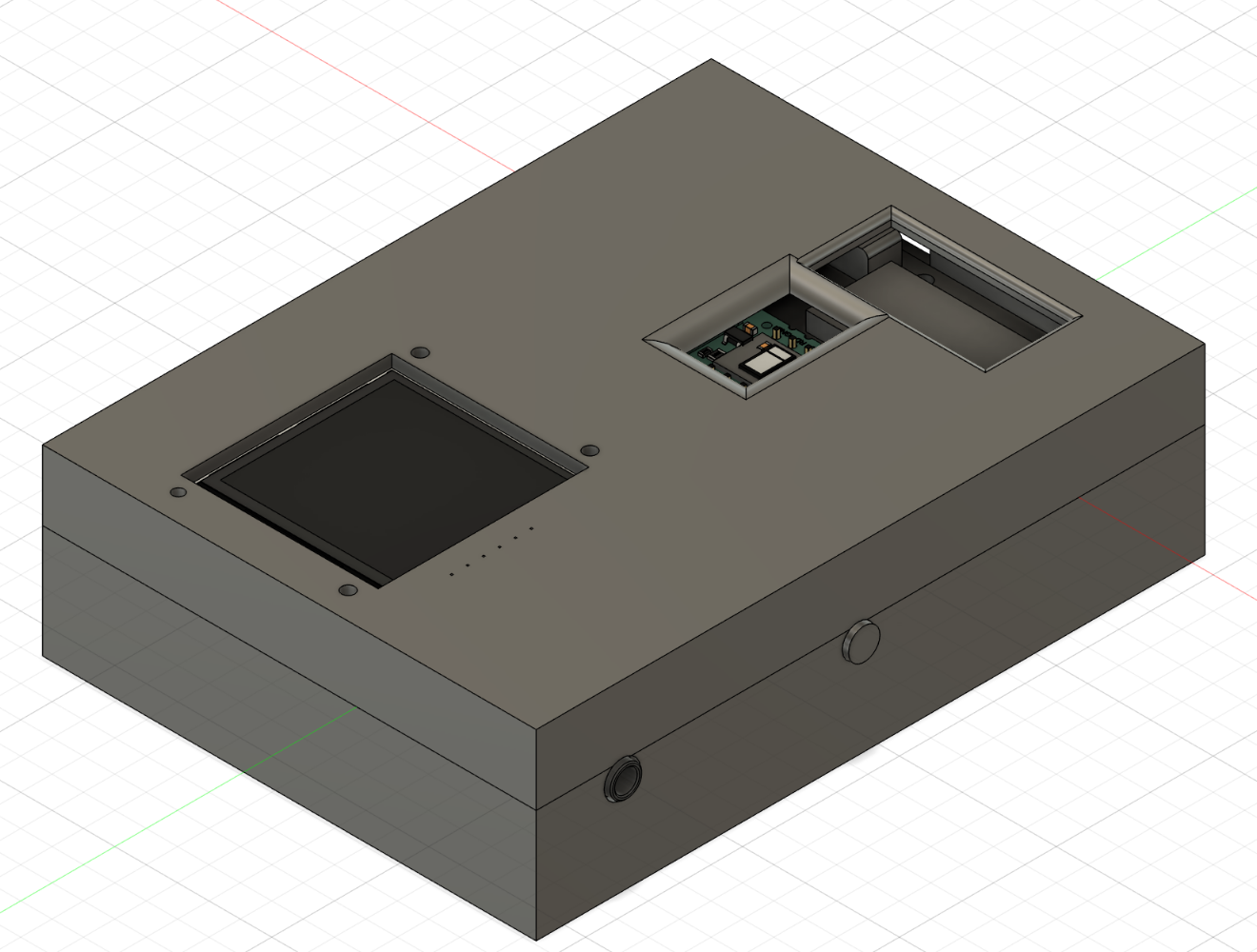
Fusion 360 model of the closed portable biosignal monitor enclosureExterior / enclosure architecture

Flagship build

Portable 3-in-1 Biosignal Monitor

The enclosure was designed around the real controller, display, sensors, controls, connectors, and cable paths. Hardware and product design developed together instead of becoming separate steps.

Platform
STEPico / RP2040
Interface
1.54-inch TFT
Software
MicroPython
Status
Functional prototype

02 / Design story

From observation to prototype.

01

Problem

Physiological signals are usually explored through separate devices and separate code.

02

Limitation

More equipment creates more setup, cost, and disconnected experiments.

03

Redesign

One STEPico controller, one display, and three sensing modes.

04

Prototype

Electronics, controls, and enclosure were developed as one physical system.

System architecture

Three modes.
One interaction model.

01

ECG / heart rate

AD8232 input, scrolling waveform, and weighted BPM logic.

02

Muscle activity

Live EMG level with an adjustable threshold.

03

Blood oxygen

MAX30102 red and infrared sampling with calibration feedback.

03 / Fusion 360 development

Designing the space between every component.

Populated internal electronics layout in Fusion 360
01Component fit and complete assembly
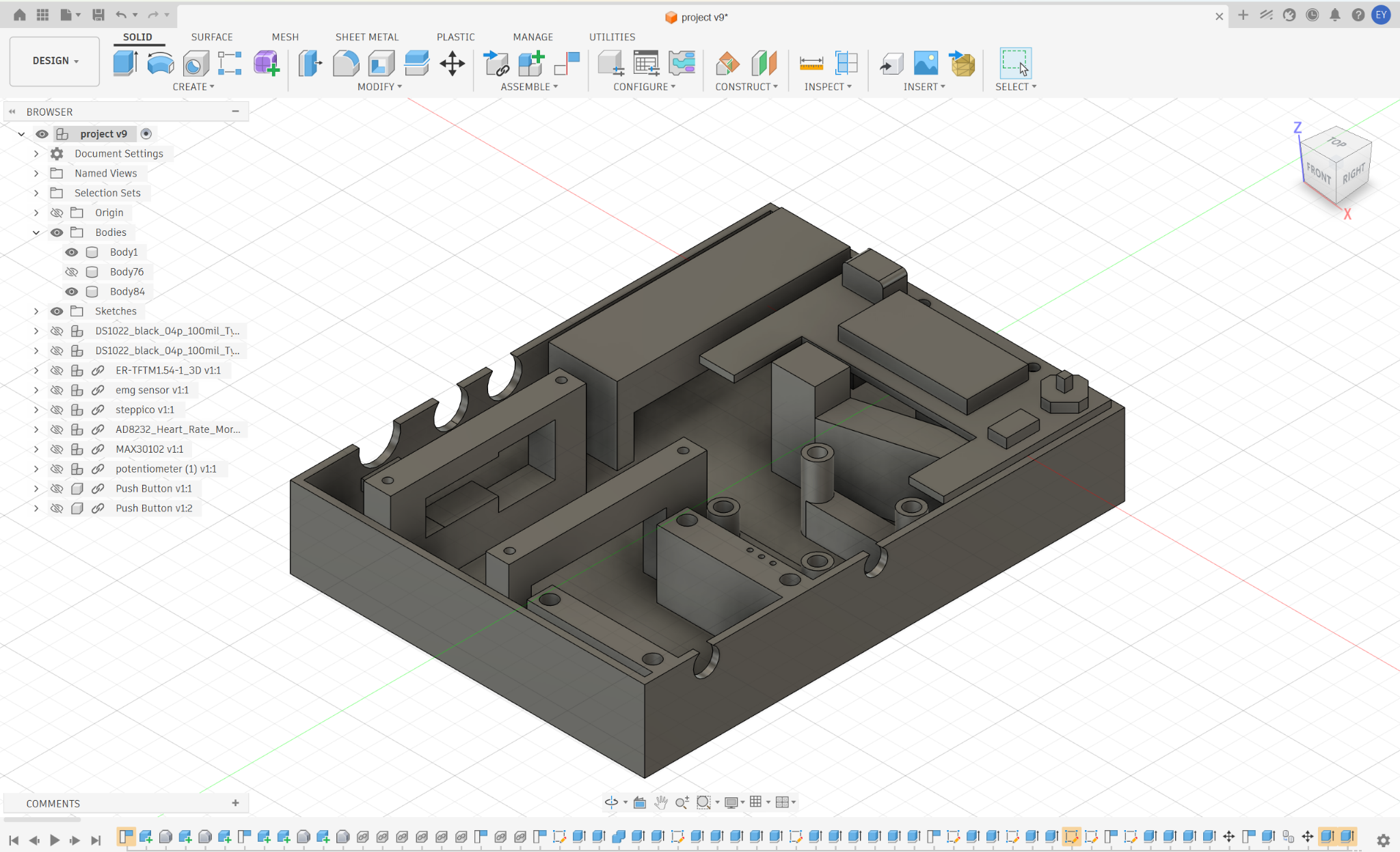
Internal mounting structure in Fusion 360
02Mounts, channels, and clearances
Closed enclosure model in Fusion 360
03Final exterior and interface openings

04 / Development

June—August
2025

Approximately ten hours per week, moving from separate tests to a single device.

01

Individual sensing

Built and tested the EMG, ECG, and SpO₂ modes separately.

02

System integration

Resolved shared display, variables, framebuffer, and mode-switching conflicts.

03

Product design

Organized the full assembly in Fusion 360 and documented the final connections.

Workbench notes

Recorded while coding and rebuilding.

These are compact connection reminders from the prototype process, not a formal medical-device schematic. Power and ground were checked before signal wires.

final version.pypin reminder

01GP28AD8232 output / ECG signal

02GP27EMG signal

03GP26Threshold potentiometer

04GP2 · GP3Mode and calibration buttons

05GP6 · GP9MAX30102 data and clock

06GP10 · 11TFT clock and data

07GP13 · 14 · 15TFT select, command, and reset

Unused pins were marked before rewiring. Body-connected testing requires teacher or experienced-adult supervision.

Daily problems

Notice first.
Design second.

Strong projects often begin with a small, specific frustration.

  • Why do reusable bottles still leak?
  • Why are cables difficult to organize?
  • Why can parcels be hard to carry?
  • Why do backpacks create uneven pressure?
Application demo · entries are not stored.

Design database

Problems organized by where they matter.

01Health

02Sports

03Education

04Transportation

05Accessibility

06Environment

Student Solutions